Feel free to contact us for any assistance or inquiries regarding our services.
Have you ever thought about why a construction contract agreement in Nepal has become increasingly important nowadays? This question has a straightforward answer: it has become important because it protects the rights of both parties—homeowners and builders—during the construction process.
A written contract agreement is important to prevent future misunderstandings and disputes related to cost, time, scope of work, and material specifications between clients and builders in Nepal. If you are planning to start a construction project, you should start the project after signing a construction contract agreement in Nepal.
While a construction agreement may be made in different forms depending on the circumstances, this article focuses primarily on written construction contracts, as they provide a clear record of the terms agreed upon by the client and builder.
This article is written by ST Builders to explain why a construction agreement is important, what should be included in it, and provide a real contract example from ST Builders.
What Is a Construction Contract Agreement?
A construction contract agreement is an agreement between a client and a builder that sets out the terms and conditions to be followed by both parties throughout the construction project. It clearly defines the scope of work, material specifications, project completion time, payment terms, and other project-related details.
A construction contract also provides a clear overview of the roles and responsibilities of both the client and the builder. In simple terms, a written construction contract agreement provides a clear record of the terms agreed upon by both parties and can be referred to if disputes arise during or after the construction project.
Can a Construction Contract Be Verbal or Written?
Yes, a construction contract can be made verbally or in writing, depending on the circumstances and any legal requirements that may apply. However, a written construction contract is generally more practical because it clearly records the terms agreed upon by both parties.
Verbal agreements can be difficult to verify if disagreements arise over important matters such as the scope of work, payment terms, material specifications, or completion time. For this reason, construction companies and clients commonly use written contracts to clearly document their agreement and responsibilities.
This article focuses primarily on written construction contracts because they provide a clear record of the terms and conditions agreed upon by the client and builder.
Why Is a Construction Contract Agreement Important?
Helps settle future disputes
A construction contract includes the scope of work, payment terms, material specifications, and other important project details. If any dispute arises regarding these matters, the contract can be referred to by both parties to help resolve the dispute in a clear and appropriate manner.
Prevents misunderstandings
A written contract agreement helps prevent misunderstandings between both parties by clearly documenting the terms and conditions agreed upon before the construction project begins.
Provides legal protection to both parties
It provides legal protection as it serves as written proof of the agreement between both parties. In case of a breach of the agreement, either party can use the contract as a basis for taking appropriate legal action.
Builds trust between homeowners and builders
Starting a construction project with a written contract can help a construction company gain the trust of homeowners by showing transparency and professionalism. At the same time, a clear agreement also gives builders confidence that the clients understand and agree to the terms of the project.
Reduces the risk of unfair construction practices
The scope of work and material specifications are clearly mentioned in the agreement. This helps reduce the risk of unfair construction practices, such as using lower-quality materials than agreed upon or leaving parts of the agreed work incomplete.
What Should a Construction Contract Include?
A proper legal construction contract should include all the required terms and conditions, as well as the roles and responsibilities of homeowners and builders. It should include:
• Client Details
It should include the complete details of the client who is hiring the builder, such as their name, address, contact details, and other relevant identification information.
• Builders Details
Along with the client’s details, a construction contract should include the details of the builder who is executing the project. This may include the company’s office address, registration details, registration number, authorized representative, and other required information.
• Project Details
Project details such as the project location, land area, number of floors, and project size should be clearly mentioned in the construction contract.
• Scope of work
The contract should clearly define the construction work that the builder is responsible for completing. It should include all works covered by the builder’s responsibilities and clearly state what is included in and excluded from the agreed scope of work.
• Materials specifications
It should include the brand and specifications of the materials to be used in the project to help ensure the agreed quality of construction materials.
• Payment terms
The terms and conditions for the payment schedule should also be included in a construction contract. It should define the amount of payment the client needs to make at each stage of the construction project.
• Completion time
The duration of the construction project should be clearly defined in the contract, including the expected start and completion dates.
• Roles and responsibilities
The construction contract should define the roles, responsibilities, and obligations of both builders and homeowners throughout the construction process.
• Delay and Extension of Time Provisions
The contract should include provisions explaining how construction delays will be handled, including the circumstances in which the completion period may be extended and the responsibilities of both parties.
• Contract termination provisions
The contract should include how the contract can be ended and the conditions under which it can be terminated during the construction process.
• Compensation provisions
The contract should include compensation provisions that explain when the contractor may be required to pay compensation if certain issues arise during the construction project. Different conditions may apply depending on the cause of the issue.
• Dispute settlement process
The process that will be followed by both parties if any disputes or misunderstandings arise during the project should also be included in the contract. This helps both parties understand how disagreements should be addressed and resolved.
• Warranty period
The contract should mention a warranty period that defines the construction company’s responsibilities if any construction-related issues arise during the warranty period. It should also clarify which types of defects or issues are covered under the warranty.
• Signatures
At the end of the contract, the signatures and thumbprints of both parties should be included to confirm that they have agreed to the terms and conditions of the construction contract. Both parties should also sign every page of the contract to acknowledge and verify the contents of each page.
Real Example of a Construction Contract Agreement by ST Builders
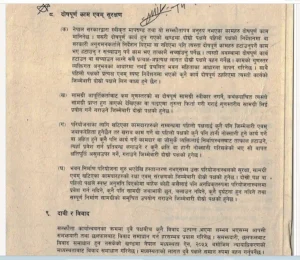
To understand how a construction contract works in practice, let’s look at a real example of a residential construction contract used by ST Builders in Nepal.
→ How does ST Builders define the scope of work?
In the ST Builders agreement, the scope of work is broken down into individual construction activities to help both parties understand which works are covered under the agreement. This section also helps track project progress and verify the completion of the agreed work.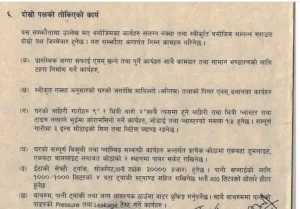
→ How are construction payments divided into stages?
Instead of listing only the total cost, the payment schedule is divided into different stages linked to the completion of agreed work. ST Builders structures payments according to the stages of construction, helping both parties track payments against project progress.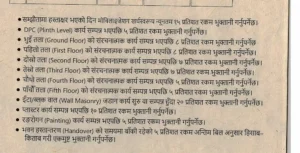
→ How does the contract specify construction materials?
The ST Builders contract records requirements for selected materials, including relevant quality standards, brands, and price limits where specified.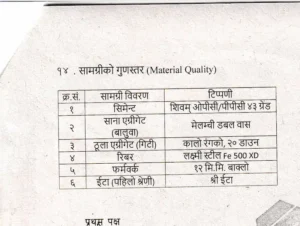
→ How does the agreement address disputes?
The ST Builders agreement outlines a process for resolving disputes between the parties, including negotiation and arbitration. Clearly documenting these procedures helps both parties understand how disagreements related to the construction project are intended to be addressed.
Planning a Construction Project in Nepal?
A clear construction agreement is an important step toward managing your project with confidence. ST Builders provides residential and commercial construction services to help you plan and execute your project.
What Are the Roles and Responsibilities of Clients and Builders?
Both the client and the builder have specific roles and responsibilities throughout a construction project. A construction contract clearly defines what each party is expected to do, helping both sides understand their obligations and reducing the risk of misunderstandings or disputes during the project.
| Client Responsibilities | Builder Responsibilities |
|---|---|
| Provide required information and documents. | Carry out construction work according to the agreed scope of work. |
| Make payments according to the agreed schedule. | Follow approved drawings and project specifications. |
| Communicate with the builder regarding changes or additional requirements. | Manage workers, subcontractors, and construction activities. |
| Make timely decisions and provide required approvals. | Use the agreed construction materials. |
| Provide site access and arrange required utilities such as electricity. | Follow the agreed project schedule. |
| Pay applicable taxes and additional costs for work outside the agreed contract scope. | Maintain construction quality and address defects covered under the warranty. |
What Happens If a Construction Project Is Delayed?
Construction projects can be delayed for various reasons, and the responsibility of each party may depend on the cause of the delay. A written construction contract should clearly explain how delays are handled, including the responsibilities of the client and builder, conditions for extending the completion period, and any consequences that may apply.
Delays can occur due to different circumstances, such as changes requested by the client, delayed approvals, material availability, unforeseen site conditions, or issues during construction. The contract should specify how each situation is addressed and who is responsible for the resulting impact on the project timeline.
Common reasons for delays and how they may be handled:
| Reason for Delay | How It May Be Handled |
|---|---|
| Changes Requested by Clients | If the client requests changes or additional work, the completion schedule may be adjusted according to the terms of the contract. |
| Payment Delayed by Clients | If payments are not made according to the agreed schedule, the contract may allow the builder to suspend or hold the project until the payment issue is resolved. |
| Unavailability of Materials | The responsibility may depend on which party is responsible for purchasing, supplying, or managing the required materials under the contract. |
| Weather Conditions | The contract may provide additional time for delays caused by weather or other circumstances beyond the parties’ reasonable control. |
| Builder-Related Delays | If the delay is caused by the builder, the builder may be responsible for addressing the delay according to the provisions agreed in the contract. |
| Delay in Client Approval and Decisions | If the client delays required approvals, decisions, or instructions, the completion period may be extended according to the terms of the contract. |
What Happens If the Client Does Not Make the Payment?
There are some cases where a client fails to make an installment payment within the agreed time. If a client fails to make the payment on time, the contractor may have certain rights, depending on the terms and conditions mentioned in the contract. The client may also be required to follow the provisions agreed upon in the contract.
Below are some provisions that the builder may take in case of delayed or unpaid payments:
• The builder can send a reminder
Without taking any further action, the builder can send a formal reminder to the client requesting them to make the overdue payment. This can be the first step a builder takes when a client fails to make a payment on time.
• The builder may hold the project
If the client fails to make an agreed installment payment after receiving a payment reminder, the builder may temporarily pause the construction work, if permitted by the contract. Work may resume once the outstanding payment is made.
• Builder can request the payment settlement
If any payment remains due after completing the project, the builder can request the client to settle the outstanding amount according to the payment terms agreed upon in the contract.
• The completion time may be extended
If the client delays the agreed payment, the duration of the project may be extended due to the resulting delay in construction work, depending on the terms and conditions of the contract.
• The contract may be terminated
If non-payment continues, the builder may terminate the construction contract agreement if the contract includes a provision allowing termination due to non-payment.
• Take legal action
The National Civil Code provides provisions for breach of contract, including compensation in certain circumstances. If the client refuses to pay the outstanding amount, the builder may take appropriate legal action according to the terms of the contract and applicable law.
What Happens If the Client Requests Changes to the Construction Work?
The construction contract agreement may need to be changed or updated if the client requests changes to the agreed construction work. Such changes may affect the scope of work, project cost, materials, or completion time, so they should be agreed upon by both parties.
If the client requests changes to the construction work, the following effects may occur:
• Additional cost
If the client requests changes to the construction work, additional costs may arise beyond the amount agreed upon in the contract. As a result, the total project cost may increase depending on the changes requested.
• Changes in project duration
Additional work may require additional time to complete. Therefore, changes requested by the client may extend the overall project duration and completion date.
• Changes in BOQ and agreement
Changes in the construction work may require the BOQ and construction contract agreement to be updated to reflect the changes agreed upon by both parties.
• Change in payment schedule
If the project cost increases due to changes in the construction work, the payment schedule may need to be revised based on the updated project cost and the terms agreed upon by both parties.
• Written agreement of changes
Written documentation of the requested changes is important to prevent misunderstandings between the client and the builder. Both parties should review and approve the agreed changes before the additional work is carried out.
What Happens If the Builder Fails to Follow the Contract?
In a construction contract agreement, the roles and responsibilities of the builder are clearly mentioned. The contract defines what work needs to be carried out, how it should be done, and what materials should be used. However, in some cases, a builder may fail to follow the agreed terms, either intentionally, to reduce costs or unintentionally.
→ A builder may fail to follow the contract in the following ways:
– Using materials different from those specified in the contract
– Failing to meet agreed quality standards
– Delivering poor workmanship
– Failing to complete work within the agreed timeline
– Failing to address defects covered by the warranty
→ What Can the Client Do?
If the builder fails to follow the terms and conditions of the construction contract, the client may take the following steps:
– Raise the issue with the builder
– Request correction or rectification of the work
– Request compensation, where applicable
– Terminate the contract, if permitted under the contract
– Take appropriate legal action
How Is a Construction Contract Terminated?
A construction contract can be terminated under certain conditions specified in the agreement. One party cannot simply terminate the contract without following the terms and conditions or termination procedures mentioned in the contract. Normally, a construction contract ends when the project is completed. However, in some cases, the contract may be terminated before the project is completed.
The following are some conditions under which a construction contract may be terminated:
1. After completing the project
A construction contract normally ends after the agreed project work has been completed according to the terms and conditions of the contract.
2. Mutual termination
If both parties mutually agree to terminate the contract for any reason, the construction contract can be terminated according to the terms agreed upon by both parties.
3. Serious breach of contract
The contract may be terminated if either party seriously breaches the contract by failing to follow their agreed obligations. Compensation or other remedies may apply depending on the terms and conditions of the contract and applicable law.
4. Failure to make agreed payments
If the contract gives the contractor the right to terminate the contract due to non-payment, the contractor may terminate the contract if the client fails to make the agreed payment even after the specified notice period has expired.
5. Unreasonable project delay
A client may be able to terminate the contract if the contractor unreasonably delays the project without a valid reason, provided that the contract allows termination under such circumstances.
How Are Construction Disputes Resolved with the Help of a Construction Contract Agreement?
As we know, a written contract serves as solid evidence in case of disputes and misunderstandings. Both parties can refer to the contract to understand what was agreed upon and help resolve the conflict. The agreement may also specify how disputes should be resolved.
The following steps may be followed to resolve a construction dispute:
Discuss the Issue
First, both parties should discuss the issue to understand what problem has arisen and the reason behind it. This can help both parties identify the cause of the dispute and find a possible solution.
Review the Contract
After discussing the issue, if it cannot be resolved through discussion, both parties should review the contract to determine what was originally agreed upon and whether the issue is covered by the terms and conditions of the agreement.
Follow the Dispute Resolution Process Mentioned in the Contract
The construction contract agreement may include a specific dispute resolution process. It may provide a mutual solution between both parties or specify other methods for resolving the dispute.
Take Legal Action
If the above methods do not resolve the dispute, either party may take appropriate legal action according to the terms of the contract and applicable law.
Summary
A construction contract agreement in Nepal helps homeowners and builders clearly define their roles and responsibilities, project costs, payment terms, material specifications, and completion timelines. It helps prevent misunderstandings and provides a written record that both parties can refer to if disputes arise. A written construction contract is generally preferable to a verbal agreement because it provides clear evidence of the terms and conditions agreed upon by both parties.
Frequently Asked Questions
1. Can a written contract agreement be changed after signing?
→ Yes, a written contract agreement can be changed after signing if both parties agree to the changes. Any changes to the original agreement should be clearly documented and approved by both parties to avoid misunderstandings or disputes in the future.
2. Who keeps the original document of the contract?
→ The original signed contract is generally kept by the party designated in the agreement, while the other party should receive a signed copy.
3. Is a construction contract necessary before beginning the project?
→ Yes, it is highly recommended to have a written construction contract before starting a construction project to clearly define the agreed terms and conditions.
4. Can I terminate the contract without the contractor’s approval?
→ It depends on the terms of the contract. If the contract allows termination under specific conditions, you may be able to terminate it without the contractor’s separate approval by following the required procedure.
5. Can I use the agreement as evidence during conflicts?
→ Yes, a signed construction agreement can be used as evidence in case of a dispute because it provides a written record of the terms agreed upon by both parties.
Planning to Build a House or Commercial Property in Nepal?
Make informed decisions before starting your construction project. ST Builders offers comprehensive construction services, from project planning and design to construction and finishing.
Contact our team to discuss your project requirements and take the next step toward building your property.
Related Blogs
- 15 Common Construction Mistakes Made by Homeowners in Nepal
- Build or Buy a House in Nepal: Which Option Is Better for You?
- Construction Companies in Nepal: Services, Types & How to Choose the Right One
- Interior Design Trends in Nepal
- Modern House Design Trends in Nepal
- Naikap Village Resort Case Study: Commercial Construction in Kathmandu
- Per Sq Ft Construction Cost in Nepal
- Residential Construction Process in Nepal
- Top Qualities of The Best Construction Companies in Kathmandu
- Turnkey Construction in Nepal
Need Help?