Feel free to contact us for any assistance or inquiries regarding our services.

Residential construction process in Nepal is carried out through several important stages that includes planning, site surveys, design, construction, and finishing works. Constructing a house in Nepal requires careful coordination, technical expertise, and adherence to legal requirements. Before starting any construction project, homeowners must obtain the necessary permits and approvals from the concerned government authorities.
Residential construction is not just about mixing concrete and assembling materials—it represents a lifetime investment and is deeply connected to our emotions. Therefore, it is essential to understand the basic construction process to ensure a strong return on your lifetime investment and achieve the desired quality, safety, and durability of your home.
This article will help you understand the complete construction process in Nepal and avoid costly mistakes during your construction journey. You can also explore our guide to hiring a construction company in Nepal to understand how different builders work and what to look for before starting your project.
Overview
| Construction Stage | Typical Timeline | Primary Responsibility |
|---|---|---|
| 1. Planning & Budgeting | 1–2 Weeks | Homeowner |
| 2. Consultation | 3–7 Days | Homeowner & Construction Company |
| 3. Architectural & Structural Design | 2–6 Weeks | Architect & Structural Engineer |
| 4. Cost Estimation & Quotation | 3–7 Days | Contractor / Construction Company |
| 5. Contractor Selection | 1–2 Weeks | Homeowner |
| 6. Contract Signing | 1–3 Days | Homeowner & Contractor |
| 7. Approval & Permits | 30–90 Days | Contractor (or Homeowner) & Municipality |
| 8. Site Preparation | 3–7 Days | Contractor & Site Engineer |
| 9. Foundation Work | 2–4 Weeks | Contractor & Structural Engineer |
| 10. Structural Construction | 3–6 Months | Contractor, Site Engineer & Project Manager |
| 11. Finishing Work | 1–3 Months | Contractor & Skilled Trades |
| 12. Interior Design | 2–8 Weeks | Interior Designer & Homeowner |
| 13. Final Inspection | 2–7 Days | Contractor, Engineer & Homeowner |
| 14. Handover | 1 Day | Contractor & Homeowner |
Note: The above timelines are approximate and may vary depending on the project size, municipal approval process, weather conditions, labor availability, and design changes. A typical residential house in Nepal generally takes 8–14 months to complete.
1. Planning & Budgeting
Residential construction process in Nepal begins with planning and budgeting. In this stage, we define the building’s requirements, such as house size, number of floors and rooms, and the architectural style. During this phase, we also estimate the total budget required to construct the house.
Key considerations:
– Define your requirements clearly before starting the design process
– Set a realistic construction budget
– Avoid choosing complex and unrealistic designs
– Consider extra costs and expenses such as municipal approval, interior works, and utility connections
– Keep a contingency fund of 5-10% of total budget to cover unforeseen expenses
2. Consultation
After planning and budgeting, the next stage in the residential construction process in Nepal is consultation. In this stage, we meet an expert to discuss ideas, requirements, budget and site conditions, and to explore possible building options. We also take expert advice on how to proceed with the construction of the house.
Things to consider:
– Don’t take advice from random contractor
– Try to consult with multiple construction companies
– Ask about their previous residential projects
– Clearly discuss about your budget and requirements to receive realistic recommendations
– Discuss the construction packages along with estimated timeline and budget and compare the proposals
Need expert guidance before starting your house construction? ST Builders offers professional consultation to help you plan your budget, understand the construction process, and choose the right construction package for your project.
Get a free consultation today.
3. Architectural & Structural Design
This stage defines the layout and functionality of a building. Architectural design focuses on appearance and space utilization, while structural design focuses on the strength and safety of the building. We can design our house according to our interests. It can be a traditional design, a modern design, or a specialized design. This stage determines how the building layout will look and how durable it will be.
| Architectural Design | Structural Design |
|---|---|
| Floor plan & room layouts | Foundation design |
| 3D elevation & exterior design | Beam, column & slab design |
| Space optimization & furniture layout | Load calculations (dead, live & wind loads) |
| House design & Vastu Shastra compliance | Earthquake-resistant design (ductile detailing) |
| Electrical, plumbing & sanitation layouts | Rebar (steel) reinforcement detailing |
Key considerations:
– Hire a qualified and experienced architect to create functional and practical house design
– Ensure the structural design is prepared by a licensed engineer to guarantee safety, durability, and stability
– Do not skip the electrical, plumbing, and sanitation layouts
– Ensure proper structural calculations are carried out for the foundation, beams, columns, slabs, rebars, and overall load-bearing system
– Design the building that complies with municipal by-laws and setback rules
4. Cost Estimation & Quotation
It involves the detailed cost breakdown of residential construction in Nepal. Contractors estimate the total cost based on materials, labor, equipment, and other requirements. After that, they prepare a quotation to present to the client, which includes the total cost, work details, and payment terms. This helps the client clearly understand how much the house construction will cost.
Things to consider:
– Do not rely solely on the total quotation amount when comparing contractors
– Request a detailed BOQ to understand the materials quality, quantity, specifications, and costs
– Compare quotations from multiple construction companies and review payment schedule and terms
– Ensure the BOQ clearly defines the scope of work including what is included and excluded from the quotation
– Do not finalize the builder because they offer the lowest quotation
5. Contractor Selection
Contractor selection is one of the most important stages in the building construction process in Nepal. There are many construction companies in the country, so choosing the right builder is essential for successful house construction. We should not directly select a construction company without proper verification. Instead, we should evaluate contractors based on their working experience, past projects and portfolio, legal registration and license, quality of materials they use, cost comparison with other companies, project completion timeline, and written contract agreement. Considering these factors helps in selecting the best construction company in Nepal.
Things to consider:
– Preview their past projects and portfolio before selection
– Verify the legal registration of the construction company
– Inspect the quality of materials they use
– Read customer reviews and testimonials
– Ensure the builder provides a clear written contract, warranty, and after-construction support
Why Choose ST Builders For Residential Construction in Nepal?
With over 30+ years of industry experience, ST Builders is committed to delivering quality construction solutions tailored to each client’s needs, budget, and vision. We follow a client-centric approach, ensuring every project is planned and executed with careful attention to your requirements. Having successfully served 350+ families, we understand what it takes to build homes that are functional, durable, and aligned with your expectations.
We provide complete house construction solutions in Nepal, including:
✅ Consultation and planning services
✅ Architectural and structural designing
✅ Naksa pass/municipal approval support
✅ Turnkey house construction
✅ Interior design
✅ Renovation and remodeling
Before making a decision, you can also explore our residential construction projects to see the quality of our work, design approach, and construction standards.
6. Contract Signing
After selecting the right contractor, a written contract agreement is signed. A written contract is a key part of the construction process, as it clearly defines the agreement between both parties regarding the project cost, timeline, materials, scope of work, and payment terms. It also helps ensure that both the client and contractor understand their responsibilities. Contract signing plays an important role in preventing cost and time-related disputes in the future and serves as formal proof of the agreed terms.

Key considerations:
– Check the contract clearly defines the roles and responsibilities of both contractor and client
– Verify that the contract includes the project scope, construction timeline, payment terms, and materials specifications
– Include the dispute resolution and termination clauses
– Review all terms and conditions carefully
– Make sure both parties sign the contract and retain a copy
– Do not sign a blank or incomplete contract
7. Approval & Permits
Residential construction approval in Nepal requires the submission of architectural drawings and property documents, including the land ownership certificate (Lalpurja), citizenship, and tax clearance. After submitting the required documents, the building permit is issued. Construction companies usually handle this process themselves. The approval process can be lengthy and may take 30–90 days. The municipal office charges a fee for building approval, which typically ranges from NPR 15 to NPR 25 per square foot in Nepal.
Documents required for approval:
– Land Ownership Certificate (Lalpurja)
– Citizenship Certificate of property owner
– Tax clearance receipt
– Land survey map (Napi Naksa)
– Architectural and structural drawings
– Soil testing report (if required)
– Application form and other municipality-required documents
Key considerations:
– Do not start the construction work before obtaining official building permit
– Ensure all the documents are complete and submitted
– Check the accuracy of the documents and drawings before submission
– Make sure that the building design complies with municipal building rules by-laws
– Keep copies of the approved permits and drawings
8. Site Preparation
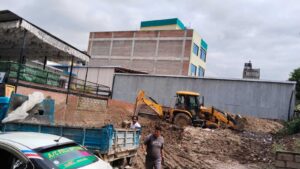
This is the initial stage of implementing the construction plan. During this phase, the project site is cleared and prepared for construction work. Workers carry out cleaning activities such as removing bushes, debris, and other obstacles, while engineers conduct site surveys, soil testing, land leveling, and layout marking. Proper site preparation ensures a smooth construction process, improves site safety, and helps prevent issues during later stages of construction.
Considerations:
– Conduct a soil test
– Verify the plot boundaries and building layout
– Install proper site fencing and safety measures to protect workers and construction materials
– Manage the temporary water and electricity connections for construction works
– Ensure proper site leveling and site drainage to prevent waterlogging
9. Foundation Work
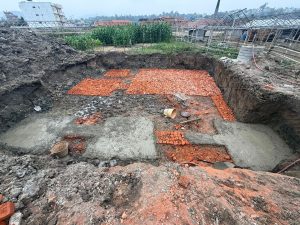
The base of the building is constructed during the foundation work stage. This is a critical part of the construction process as it directly affects the building’s stability, safety, and durability. Foundation work involves excavation, plain cement concrete (PCC), footing reinforcement, and foundation casting. A strong foundation supports the entire weight of the building and transfers the load safely to the ground, ensuring long-term structural strength and stability.
Considerations:
– Ensure the foundation work is carried out according to the approved structural drawings
– Use the specified grade PPC and reinforcement bar
– Verify the soil condition matches the structural design assumptions
– Have foundation work supervised by a qualified engineer
10. Structural Construction
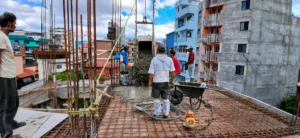
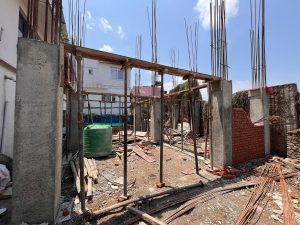
Foundation work is followed by structural construction, where the main framework of the building is built. This stage involves assembling materials and concrete according to the approved architectural and structural designs. It includes the construction of columns, installation of beams, slab casting, staircase construction, and brickwork. In simple terms, it is the phase of floor-by-floor development. During this stage, the architectural design is transformed into an actual building structure.
Key considerations:
– Ensure all the construction work follows the approved architectural and structural drawings
– Check the quality of construction materials including cement, steel, bricks, and concrete
– Visit the construction site regularly to monitor progress
– Discuss any design or layout changes with the architect and contractor
– Ensure the project is supervised by a qualified engineer or project manager
11. Finishing Work
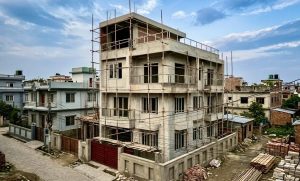
After constructing a building, finishing work defines its appearance and beauty. This stage includes plastering, flooring, painting, installation of doors and windows, waterproofing, plumbing, and electrical work which are handled by painters, electricians, plumbers, and other skilled workers. Finishing work indicates that the building is in its final stage and is almost ready for use. It transforms the raw structure into a fully functional building.
Considerations:
– Inspect the quality of finishing materials
– Verify the electrical, plumbing, and sanitation installations match the approved design drawings
– Verify the quality of plastering, flooring, and painting
– Check the waterproofing works to avoid seepage in the future
12. Interior Design
Interior design is an after-construction process that focuses on enhancing the beauty and functionality of a house. Many construction companies in Nepal have in-house interior designers who handle all interior works, while some companies do not offer this service. In such cases, you can hire professional interior designers for your home. Residential construction in Nepal often includes interior works such as modular kitchen design, wall design, furniture and decor, false ceiling design, space optimization, and lighting design.
Considerations:
– Hire a professional interior designer if your construction company does not offer interior design service
– Choose furniture and decor items that complement the architectural design
– Use multifunctional and space saving furniture
– Select the furniture, lighting, colors, decor materials that matches your personal preference and lifestyle
– Plan the interior that improves both functionality and comfort
13. Final Inspection
After completing all the construction work, the construction company carries out a final inspection. This includes checking the quality and safety of the building, verifying the functionality of electrical and plumbing systems, and ensuring there are no defects. The final inspection confirms that all work has been completed properly and the building is ready for use.
Considerations:
– Check the operation and alignment of doors, windows, and locks
– Inspect the walls, floors, ceilings, and tiles for cracks, uneven finishes, and other visible defects
– Test the functionality of electrical, plumbing, and sanitation installations
– Make a list of defects and ensure it is rectified before handover
– Verify that all the agreed works in the contract have been completed
14. Handover
This is the final stage of the residential construction process in Nepal. After proper inspection, the completed house is handed over to the owner. Construction companies also provide the necessary documents and warranties during the handover. After a lengthy construction process, the house will be delivered to the house owner.
Considerations:
– Retain a warranty documents and understand defect liability period
– Obtain the municipal completion certificate
– Collect all original documents submitted to the contractor including approved drawings, permits, and personal property documents
– Receive all keys, access devices, and warranty cards for installed equipment
• Conclusion
Residential construction in Nepal is carried out through a well-planned process. The process involves several phases, starting from planning and budgeting, consultation, architectural and structural design, quotation and cost estimation, contractor selection, contract signing, approval and permits, site preparation, foundation work, structural construction, finishing work, interior design, inspection, and final handover. The entire process is handled by engineers, contractors, architects, skilled workers, and semi-skilled workers. With proper planning and municipal permits, the construction work will be completed successfully.
Ready to start your house construction journey in Nepal?
From design and approval to construction and handover, ST Builders provides complete residential construction solutions tailored to your needs.
Frequently Asked Questions (FAQs)
1. How long does it takes to build a residential house in Nepal?
→ A typical house in Nepal takes 8 to 14 months to complete, depending on design complexity, project size, weather conditions, materials and labor availability, and municipal approval time.
2. Can I start construction work before obtaining municipal approval?
→ No, you must obtain municipal approval and required building permits before starting construction. Beginning construction without approval may result in fines and penalties, stop-work notices, and legal issues.
3. What documents are required for residential building approval in Nepal?
→ For residential building approval commonly required documents are Land Ownership Certificate (Lalpurja), Citizenship Certificate, Tax Clearance Certificate, Land Survey Map, Architectural and Structural Drawings, and Municipality forms.
4. Who is responsible for municipal approval process?
→ Most construction companies handle the municipal approval process on behalf of the homeowner. The homeowner must provide the required documents and cooperate during the process.
5. Can I make design changes after construction has started?
→ Yes, you can make design changes after construction has started but it may increase costs, delay the project, and required modifications to the approved drawings.
6. What is included in structural construction?
→ Structural construction typically includes foundation work, columns, beams, slab casting, staircase construction, brick masonry, and roof structure.
7. Is soil testing mandatory before construction in Nepal?
→ No, soil testing is not mandatory for every residential construction project in Nepal, but it is highly recommended. It helps determine the soil’s bearing capacity and enables engineers to design a strong, safe, and stable foundation.
8. Should I hire an architect and structural engineer separately?
→ Not necessarily. Top construction companies in Nepal provide architectural design, structural engineering, and construction services under one contract, making project coordination easier.
9. What is BOQ in house construction?
→ Bill of quantities (BOQ) is a detailed document that includes qualities, quantities, specifications, and estimated costs of the materials, labor, and construction activities.
10. What happens if I start construction without a written contract?
→ Starting construction without a written contract can lead to disputes over project costs, completion timeline, payment terms, materials specifications, and scope of work.
11. What should I look for before hiring a builder?
→ You should check the builder’s past projects and portfolio, legal registration and licenses, quality of materials they use, customer reviews, project timelines, and terms of the contract before making any decision.
12. Which construction stage requires the highest budget?
→ The structural construction stage usually requires the largest portion of the budget, accounting for approximately 40-60% of total project cost.
13. How are construction payments usually made?
→ Construction payments are made in stages based on project milestones. Common payment stages include contract signing, foundation completion, structural construction, roofing, finishing, and final handover.
14. What documents should I receive after construction?
→ After construction is completed, you should receive the municipal completion certificate, approved architectural and structural drawings, warranty documents, equipment warranties, and original property documents.
15. What should I check during handover?
→ During handover, check the overall quality of construction, test the electrical and plumbing systems, check doors, windows, locks, floors, paintings, tiles, ceilings, walls, and ensure all agreed work has been completed.
Related Blogs
- 15 Common Construction Mistakes Made by Homeowners in Nepal
- Build or Buy a House in Nepal: Which Option Is Better for You?
- Construction Companies in Nepal: Services, Types & How to Choose the Right One
- Interior Design Trends in Nepal
- Modern House Design Trends in Nepal
- Naikap Village Resort Case Study: Commercial Construction in Kathmandu
- Per Sq Ft Construction Cost in Nepal
- Top Qualities of The Best Construction Companies in Kathmandu
- Turnkey Construction in Nepal
Need Help?