Feel free to contact us for any assistance or inquiries regarding our services.
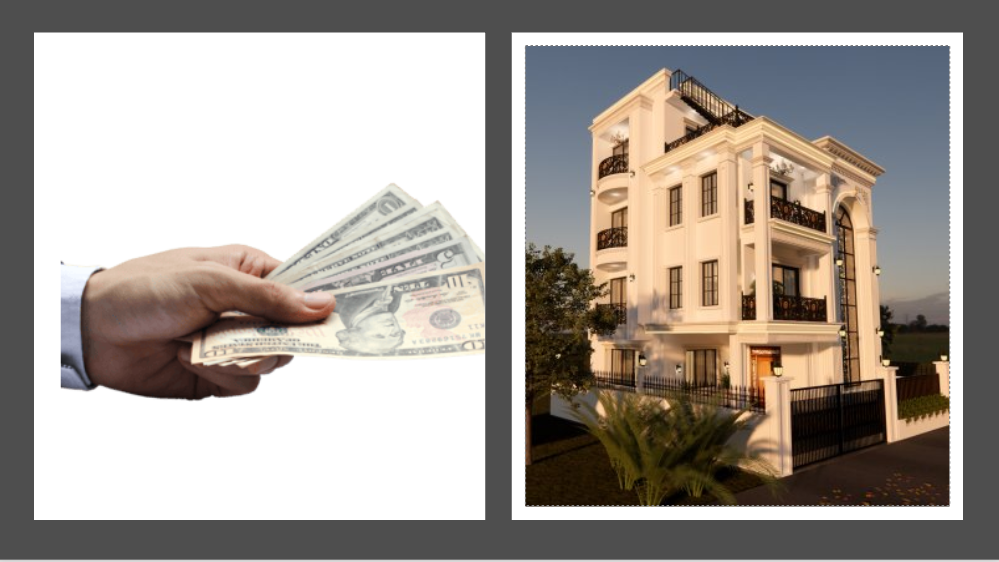
When discussing construction cost, the first and most used method is per sq ft construction cost in Nepal. This is the most widely adopted costing approach across Nepal for estimating building budgets.
Whether the calculation is based on the per sq ft method or the cost-plus method, the overall building construction cost in Nepal is influenced by several key factors, including location (Kathmandu Valley vs outside the valley), material quality, design complexity, labor availability, and project scale.
This guide will explain the per square foot costing method and the key factors that affect construction cost in Nepal in detail, along with real project examples to help you estimate your budget more accurately.
Average Per Sq Ft Construction Cost in Nepal
Basic Construction: NPR 3000 – 3500 per sq ft
Standard Construction: NPR 4000 – 5500 per sq ft
Premium Construction: More than NPR 6000 per sq ft
How is The Per Sq Ft Construction Cost Calculated?
The per square foot construction cost is calculated by multiplying the total built-up area of a building by the standard cost per square foot rate.
Total estimated cost = Built-up area * Per sq ft rate
Built-Up Area
Built-up area is commonly used by construction professionals to calculate the total construction cost of a building, which refers to the total physical area of a building measured from the outer walls, including all usable and covered spaces within the structure. It excludes open spaces such as parking areas, gardens, and open yards.
It includes:
– Wall thickness
– Rooms
– Kitchen
– Terrace and balconies
– Stairs, etc.
Note: Built-up area is not calculated by simply multiplying the number of floors by the land area. It is based on the actual allowable construction footprint, which is determined by municipal setback rules, road access, and local building regulations.
Built-up area = Actual constructed area on each floor (after setbacks) × number of floors
How Do Setback Rules Affect Per Sq Ft Construction Cost?
Setback requirements can affect the per sq ft construction cost because they determine how much of a plot can be used for building. The actual built-up area is calculated based on the allowable construction area after complying with the required setbacks.
For example, if a plot requires a 3-metre front setback from the road, the building must be constructed at least 3 meters away from the road boundary. This reduces the area available for the building footprint and can affect the total built-up area used to calculate the construction cost.
Standard Cost Per Sq Ft Rate
The construction cost per square foot in Nepal is not determined by a single material or factor. Instead, it is an average rate calculated by combining all the main construction costs, including materials, labor, equipment, overhead costs, and builder’s profit margin.
Note: This is a sample cost calculation for demonstration purposes only. Actual construction costs will vary based on your project’s design, location, material selection, and other factors.
Planning to build a house in Nepal? Contact ST Builders for a free construction cost estimate from experts or use our Construction Cost Calculator to get an instant preliminary estimate for your project.
What Factors Change The Per Sq Ft Rate?
• Location
Location is one of the most important factors affecting the per sq ft construction rate. Areas with good road access and easy transportation of construction materials generally have lower costs compared to remote or less accessible locations.
• Design Complexity
Design complexity can significantly affect the per sq ft construction rate. Houses with complex architectural or structural designs may require more detailed planning, specialized construction techniques, skilled professionals, and experienced labor, resulting in a higher per sq ft rate.
• Quality of Materials
The quality of materials is a major factor influencing the per square foot rate. Higher-quality and premium materials are significantly more expensive than basic materials, directly increasing the overall cost and the sq ft rate of construction.
• Site Conditions
Difficult conditions such as weak soil, muddy ground, or sloped land require additional foundation work, site preparation, and structural adjustments, which increase the per sq ft construction cost.
• Labor Wages
Labor wages are another important factor affecting sq ft construction costs. Areas facing labor shortages or higher living costs, such as the Kathmandu Valley, generally have higher labor wages compared to other regions in Nepal.
• Market Inflation
Market inflation and fluctuations in construction material prices can directly affect the per sq ft construction rate in Nepal. Changes in the prices of materials, labor, transportation, and imported products can increase the overall cost of construction.
Location Based Per Sq Ft Construction Cost in Nepal
The per sq ft construction cost in Nepal may vary depending on the project location. Factors such as the availability of construction materials, transportation costs, labor rates, and local market conditions all influence the overall construction cost.
Kathmandu Valley
Building a house in the Kathmandu Valley generally costs more than in many other parts of Nepal. Although the valley has easy access to construction materials, transportation, and skilled labor, high demand for residential and commercial construction contributes to higher overall construction costs.
Based on ST Builders’ construction project across Kathmandu Valley, most standard homes fall within the NPR 3,000 to NPR 6,000 cost range, depending on the quality of materials, design complexity, and project specifications.
Terai Region
House construction costs in the Terai region are generally lower than in many other parts of Nepal. The region benefits from easy access to locally manufactured construction materials, well-connected road networks, and readily available skilled and unskilled labor. These factors help reduce transportation and labor costs, making construction more economical.
The average per sq ft construction cost in the Terai region typically ranges from NPR 2,500 to NPR 4,000.
Hill and Mountain Region
Construction costs in the hill and mountain regions of Nepal are generally higher than in the Kathmandu Valley and the Terai. Challenging terrain, limited road access, and higher transportation costs for construction materials significantly increase the overall cost of building a house. In many remote areas, material transportation alone can increase construction costs by 20–30%, depending on the site’s accessibility.
The average per sq ft construction cost in the hill and mountain regions typically ranges from NPR 4,000 to NPR 6,000.
What is Included and Excluded in Per Sq Ft Construction Cost in Nepal?
Per sq ft construction cost typically includes the major structural and finishing works required to complete a building project. However, the exact inclusions can vary depending on the contractor, construction package, project scope, and material specifications.
Included in Per Sq Ft Construction Cost
• Site clearance and mobilization
• Excavation and foundation works
• RCC structure
• Brick masonry
• Plastering, flooring, and granite works
• Screeding and punning
• Doors, windows, and internal frames
• Staircase railing
• Painting and tiling
• Waterproofing
• Basic plumbing and electrical works
• Labour cost
• Construction materials
• Contractor profit margin
Not Included in Per Sq Ft Construction Cost
• Land cost
• Municipal permit charges
• Interior design and decoration
• Taxes and VAT
• Professional soil testing
• Modular kitchen woodwork
• Wardrobes, parqueting, and loose furniture
• Decorative false ceiling
• High-end home automation systems
• Specialized water filtration systems
• Compound wall construction
• External paving or driveways
Note: The items included in the per sq ft construction cost may vary from one builder to another. Some contractors offer only structural and finishing works, while others provide complete turnkey construction solutions. Requesting a detailed Bill of Quantities (BOQ) or an inclusion and exclusion list will help you clearly understand what is covered under the quoted per sq ft construction cost and identify any additional costs that may arise during the project.
Why You Should Compare BOQs, Not Just Per Sq. Ft. Rates?
With 30+ years of construction experience, ST Builders has observed that many homeowners select a construction company based primarily on the lowest per sq. ft. rate. However, a lower per sq. ft. rate does not necessarily mean a lower overall construction cost.
Reviewing the detailed Bill of Quantities (BOQ) helps you understand the cost breakdown, material specifications, quantities, and scope of work included in a construction quotation. It also makes it easier to identify differences between quotations from different builders.
The table below highlights why you should compare BOQs rather than relying only on per sq. ft. rates.
| What to Compare | Per Sq Ft Rate | BOQ |
|---|---|---|
| Overall Cost | Provides a quick estimation | Provides a detailed cost breakdown |
| Material Specifications | May not clearly mention material specifications | Proper mention of brands and specifications |
| Quantity of Work | Does not show the quantity of individual work items | Shows the estimated quantity of each work item |
| Cost Breakdown | Provides an overall rate per sq. ft. | A detailed cost breakdown is provided |
| Scope of Work | Inclusions and exclusions may not be mentioned in the rate | Inclusions and exclusions can be clearly identified |
| Cost | A lower rate may look attractive but can be misleading | May appear higher in comparison but provides transparent costing |
| Cost Control | Limited cost tracking | You can track individual costs |
Land Measurement Units in Nepal: Sq Ft Conversion Guide
Land area is commonly measured using different traditional units in Nepal depending on the region. Understanding these conversions can help homeowners estimate built-up area and calculate construction cost more accurately.
Terai Region
- 1 Dhur = 182.25 sq ft
- 1 Kattha = 20 Dhur = 3,645 sq ft
- 1 Bigha = 20 Kattha = 72,900 sq ft
Hilly and Mountain Regions
- 1 Daam = 21.39 sq ft
- 1 Paisa = 4 Daam = 85.56 sq ft
- 1 Aana = 4 Paisa = 342.25 sq ft
- 1 Ropani = 16 Aana = 5,476 sq ft
Conclusion
The per sq. ft. method is a practical way to estimate construction costs in Nepal, but the final cost depends on factors such as the built-up area, material quality, design complexity, location, and the scope of work included in the quoted rate. Don’t choose a builder based solely on the per sq. ft. rate. Always compare quotations based on their inclusions and exclusions rather than price alone. Read our complete guide to construction companies in Nepal to learn what to consider before making your decision.
Planning a Construction Project in Nepal?
Whether you’re building a house or a commercial property, ST Builders offers complete construction solutions tailored to your budget, design requirements, and project scope. From planning and cost estimation to construction and project handover, our team helps you build with clarity and confidence.
FAQs
1. What is the average per sq ft house construction cost in Nepal?
→ The average house construction cost in Nepal typically ranges from NPR 3,000 to NPR 6,000+ per sq. ft., depending on the level of finishing, material quality, project location, and design complexity.
2. How is the total construction cost calculated?
→ Total construction cost = Built-up area * Per sq ft rate
3. Is the DPC area included in the per-sq-ft rate?
→ Yes. Most builders include the DPC (Damp Proof Course) area in the standard per sq. ft. construction rate. However, some contractors may calculate or price it separately depending on their costing method and the scope of work.
4. How do builders calculate the standard per sq ft rate?
→ Builders estimate the total construction cost based on the Bill of Quantities (BOQ), including materials, labor, overhead, and profit, and then divide it by the building’s total built-up area to determine the standard per sq. ft. construction rate.
Per sq. ft. rate = Total estimated construction cost ÷ Total built-up area.
5. Are there any extra costs not included in the per sq ft rate?
→ Yes. The per sq. ft. construction rate does not usually include certain additional costs. These commonly include land cost, municipal permit fees, interior decoration, modular kitchens, wardrobes, compound walls, external paving, and utility connection charges.
6. How do I find out the additional costs?
You can identify additional costs by reviewing the Bill of Quantities (BOQ) and the contractor’s list of inclusions and exclusions before signing the contract. This helps you understand what is covered in the quoted per sq. ft. rate and what will be charged separately.
7. How much do municipal approval charges cost in Nepal?
→ Municipal approval charges vary depending on the municipality, building size, land area, building type, and applicable local bylaws. Since each local authority has its own fee structure, homeowners should consult their municipality or a licensed architect or engineer for an accurate estimate before starting construction.
8. Is labor cost included in the per sq ft construction rate?
→ Yes. Labor cost is typically included in the standard per sq. ft. construction rate offered by most builders under turnkey construction contracts. However, the scope of labor included may vary depending on the contractor and the construction package.
9. Is GST/VAT included in the per sq. ft. construction cost?
→ It depends on the contractor. Some builders include GST/VAT in the quoted rate, while others quote it separately. Always confirm whether taxes are included before comparing quotations.
10. Does the rate include plumbing and electrical work?
→ Yes. Most construction companies in Nepal include basic plumbing and electrical works in the standard per sq. ft. construction rate. However, the exact scope may vary depending on the contractor and construction package.
11. Do open sides affect the per sq ft construction cost?
→ Yes. Buildings with two, three, or four open sides may have a slightly higher per sq. ft. construction cost due to the additional exterior finishing work required.
12. How much does it cost to build a 3 storey house in Kathmandu?
→ The average construction cost of a 3-storey house in Kathmandu typically ranges from NPR 90 lakh to NPR 1.8 crore or more, depending on the built-up area, material quality, level of finishing, design complexity, and the contractor.
13. Can the rate change during construction?
→ Yes. The per sq. ft. construction rate in Nepal may change if there are design modifications, changes in material specifications, additional work, or significant increases in material and labor costs, depending on the contract terms.
14. What is the difference between plot area and built-up area?
→ Plot area is the total area of land, while built-up area is the total covered construction area across the building’s floors. The built-up area depends on factors such as ground coverage, setbacks, building regulations, and the number of floors.
Related Blogs
- 15 Common Construction Mistakes Made by Homeowners in Nepal
- Construction Companies in Nepal: Services, Types & How to Choose the Right One
- Interior Design Trends in Nepal
- Modern House Design Trends in Nepal
- Naikap Village Resort Case Study: Commercial Construction in Kathmandu
- Residential Construction Process in Nepal
- Top Qualities of The Best Construction Companies in Kathmandu
- Turnkey Construction in Nepal
Need Help?