Feel free to contact us for any assistance or inquiries regarding our services.
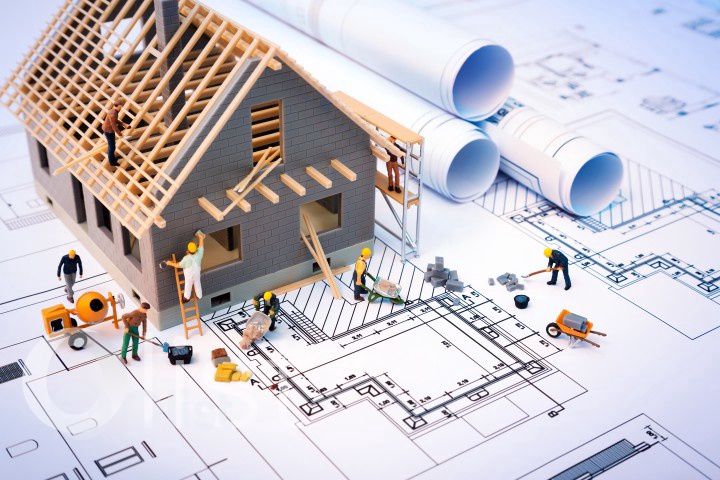
In recent years, the Nepali market has experienced a rapid growth in infrastructure development and urbanization, leading to a high demand for construction companies in Nepal. From building private houses and commercial projects to developing infrastructure like roads and bridges, the construction industry plays a crucial role in shaping modern Nepal.
Whether you are planning a residential or commercial project, selecting the right construction company is one of the most important decisions you will make. Having a basic understanding of the construction process can help you choose the right partner and avoid construction mistakes. Although there are many construction companies in the market, finding a reliable and trustworthy company that consistently delivers projects on time while ensuring safety and quality is crucial for the success of your project.
To simplify your construction journey, this guide offers a complete overview of construction services in Nepal, including the types of construction companies, services offered, construction costs, project processes, and current industry trends.
Types of Construction Companies in Nepal
There are different categories of builders serving in their specialized sectors of construction in Nepal. These are the primary types operating in Nepal:
1. Commercial Construction Companies
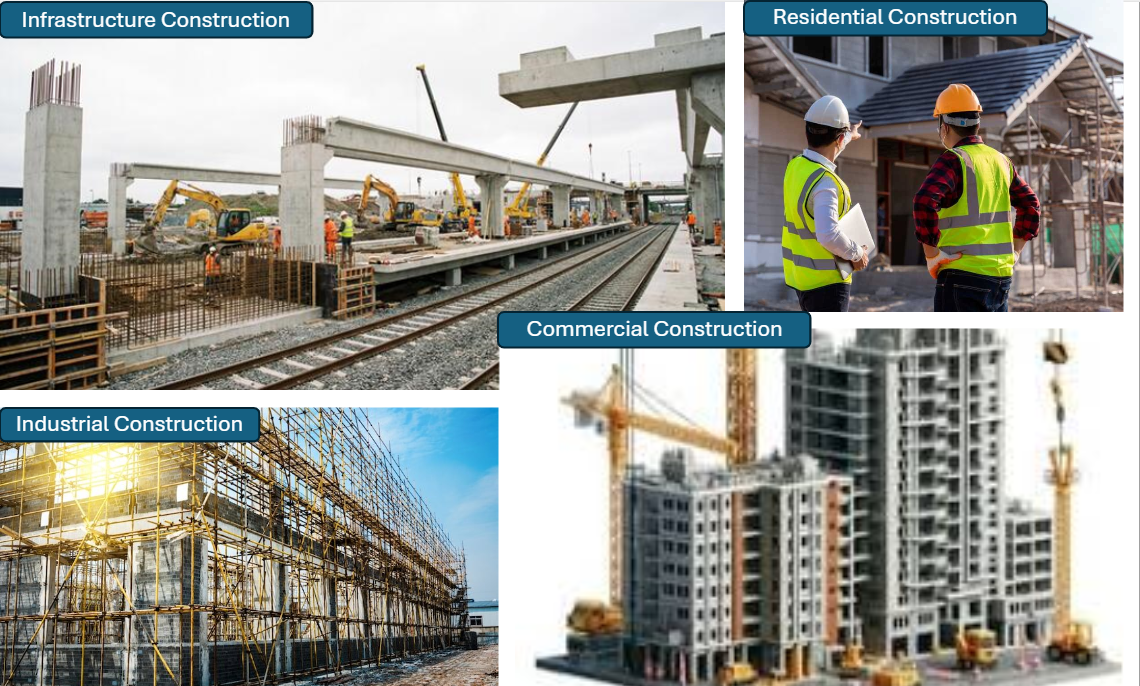
Commercial builders are non-residential building contractors who specialize in commercial construction services, including office buildings, retail spaces, hospitality projects, and educational institutions. These companies focus on delivering durable projects that meet business and institutional requirements.
2. Residential Construction Companies
Residential construction companies offer to build private homes and living spaces such as building houses, villas, and apartments. These contractors are focused on client’s personal needs. They handle each work from planning and design to construction and finishing within the client’s budget.
3. Industrial Construction Companies
This type of company handles large-scale industrial construction. They build factories, warehouses, industrial sheds, and manufacturing plants. Industrial construction requires the expertise of highly experienced construction companies in Nepal.
4. Infrastructure Construction Companies
These companies only work on government projects. They specialize in government projects such as roads and highways, airports, bridges, and hydropower projects. These companies are continuously contributing on Nepal’s development.
5. Turnkey Construction Companies
Turnkey construction contractors handle the entire construction process and are well-known in the Nepali market. They offer complete construction solutions, starting from design to handover. These construction firms have separate in-house teams for each type of work.
6. Specialized Construction Companies
Some builders in Nepal deliver specialized construction services that fulfill specific needs. They focus on specific construction areas rather than the entire project. Some examples are earthquake-resistant builders, eco-friendly construction companies, smart home builders, and interior-focused companies.
List of Services Offered by Construction Companies
Construction companies offer a wide range of construction services to meet the needs and requirements of commercial, residential and infrastructure projects. These services typically include planning, design, construction, cost estimation, interior design, and many more. Here are the main services offered:

• Architectural & Design Services
Most construction companies provide architectural and design services alongside their other offerings, while some firms specialize exclusively in design. These services typically include architectural planning and design, building drawings, 3D visualization, and structural design services.
• Construction & Engineering Services
These services include the execution of pre-designed projects. Some contractors provide end-to-end construction services, from planning and design to completion of the building. These services ensure the safety and structural integrity of a building with the help of structural, civil, and geotechnical engineers.
• Renovation & Remodeling
Construction is not only about building new structures; it also involves upgrading and improving existing ones. Therefore, many construction companies offer renovation and remodeling services along with new construction. These services include renovation of old buildings, kitchen remodeling, interior and exterior redesign, structural upgrades, and various other improvement works.
• Interior Design
Interior design services focus on the visual appearance of a project. They handle space planning, furniture selection, lighting design, and color coordination to enhance a space’s beauty and overall aesthetics. Almost 80%construction companies in Nepal have in-house interior designers.
• MEP Services
MEP stands for Mechanical, Electrical, and Plumbing work. MEP services involve the design, installation, and maintenance of building systems. These services ensure the proper functioning of air conditioning, lighting, and water supply systems.
Construction Cost Drivers in Nepal
Nepal’s construction cost is derived by various factors. It depends on:
• Project Location
Project location is a major factor in estimating construction costs. If the project is located in a rural area, transporting materials can be challenging. In contrast, if the project is in a city area, there are usually no issues with transportation. Therefore, construction costs in rural areas are slightly higher than in cities.
• Building Type
Construction costs vary depending on the type of building. Typically, residential buildings cost less than commercial and industrial construction because their project size is smaller. Commercial, industrial, and infrastructure projects are more expensive as they are large-scale and require more manpower, materials, and expertise.
• Design Complexity
Design complexity is a key factor in cost determination. A simple building design does not require advanced planning or procurement. In contrast, innovative and complex architectural designs require expert teams along with advanced planning and execution. So, complex designs cost more than simple designs.
• Quality of Materials Used
Quality of materials plays a vital role in cost estimation. There are many construction materials available on the market. Some are low-quality, while others are high-quality materials. High-quality materials ensure the durability and safety of a project, which low-quality materials do not. Therefore, construction costs increase proportionally with the quality of materials.
How to Calculate Construction Cost in Nepal?
There are different cost estimation methods used in Nepal. The most commonly used methods are the per square foot method, lump sum method, detailed estimate method, and cost-plus method. These are the costing methods in detail:

1. Per Square Foot Method
Per square foot is the most common method used by many construction companies in Nepal. In this method, cost is calculated based on the total built-up area of a building.
Formula = Total built-up area × Cost per sq ft
Average cost per square foot in Kathmandu valley:
Basic Construction = Rs.3000-4500
Standard Construction = Rs.4500-6000
Premium Construction = Rs.6000-8000
2. Lump Sum Method
In the lump sum method, a fixed total cost is estimated before construction begins. The contractor calculates all expected expenses along with the profit margin and submits a cost proposal to the client. Once both the contractor and client agree on a fixed amount through a written agreement, the construction work begins.
3. Detailed Estimate Method
The detailed estimate method is the most accurate costing method in construction. In this method, each item of work—such as materials, labor, transportation, and other expenses—is calculated separately to prepare a precise cost estimate. It is commonly used for large-scale projects, government contracts, and infrastructure developments.
4. Cost-Plus Method
In the cost-plus method, the client pays the actual cost of construction plus the contractor’s profit margin. The actual construction cost is calculated first, and then the contractor’s profit is added to determine the final cost. This method is commonly used for complex projects.
How to Choose the Right Construction Company in Nepal: Things to Consider
Choosing the best construction company in Nepal is a challenging decision. It is important to select a company carefully to ensure durability, safety, and timely completion. To better understand what differentiates top builders, you can explore our detailed guide on best construction companies in Kathmandu and what makes them stand out.
• Experience
Experienced construction companies handle work more precisely than new ones. Evaluating a company’s experience before choosing it is an important step. More experience usually means a more professional and expert team with many successfully completed projects.
• Past Projects
Reviewing past projects is also important when choosing the best construction companies in Nepal. You should carefully examine their completed projects, and if possible, visit the sites to assess the quality of work firsthand. A company’s past projects provide a clear idea of their workmanship, standards, and overall performance.
• Legal Registration
There are many local contractors in Nepal who do not have proper construction licenses or legal registration. Such companies can pose a risk to your project. Therefore, checking the builder’s background and verifying legal compliance is essential to ensure reliability and trustworthiness.
• Cost Estimation
You should not choose a construction company without comparing construction costs in Nepal. Obtaining cost estimates from different contractors and comparing them is an important step in the decision-making process. Some companies may charge higher than the standard market rate, so proper cost comparison and estimation are essential to ensure fair pricing.
• Quality of Materials
Some people choose low-cost construction instead of quality construction. Inspecting the quality of each material is important to avoid the use of low-quality materials. Sometimes people are satisfied with low prices but do not understand the reason behind the low cost. Therefore, the quality of materials matters a lot to ensure the safety and durability of the building.
• Project Timelines
Before selecting a construction company in Nepal, it is important to request a clear project timeline. You should avoid contractors who promise unrealistic completion deadlines. Instead, choose a company that provides a well-structured schedule with a proper start date and a realistic stage-wise work plan for smooth project execution.
• Written Agreement
Companies that work with a proper written agreement are more trustworthy. Without a written agreement, there is a risk of conflict between clients and builders regarding cost, time, and quality. Therefore, a written contract serves as proof in case any issues arise in the future.
Latest Construction Trends in Nepal – 2026
As the rapid urbanization and our interest is shifting from traditional construction to modern construction, different construction trends are emerging in Nepal. In 2026, the following are the key construction trends in Nepal:

• Eco-Friendly Construction
Eco-friendly construction is gradually gaining attention in Nepal. Also known as green construction, it focuses on reducing water and energy consumption, using recycled materials, and minimizing environmental impact. This approach includes the use of eco-bricks, recycled steel, natural materials, and energy-efficient insulation materials.
• Earthquake Resistant Construction
After the devastating earthquake in 2015, Nepal implemented mandatory earthquake-resistant construction policies in urban areas. Since Nepal lies in an active seismic zone, earthquake-resistant construction is essential to reduce human and economic losses during earthquakes. Recently, construction companies have increasingly adopted RCC frame structures, strong foundations, base isolation systems, and steel reinforcement bars to improve building safety and durability.
• Technology in Construction
Nowadays, digital technology is widely used in the construction industry. Technical tools such as GIS and BIM are widely used to analyze seismic zones and improve planning accuracy. Construction companies are also using drones for rapid site surveys, 3D visualization for better design understanding, and AI-based cost estimation systems to save time and improve efficiency.
• Rapid Urbanization & House Demands
With rapid urbanization, the demand for residential spaces in Nepal is growing rapidly. Major cities such as Kathmandu, Lalitpur, Bhaktapur, and Pokhara are witnessing significant urban expansion. In particular, the demand for housing in the Kathmandu Valley has increased substantially. As a result, the development of houses, apartments, villas, and housing complexes continues to rise to meet the growing needs of urban residents.
• Infrastructure Development Projects
Infrastructure development is a major trend in Nepal’s construction industry in 2026. After the formation of a new government, investment in large projects has increased. Projects like the Nagdhunga Tunnel, Postal Highway, Muglin–Pokhara Highway, West Seti Hydropower Project, and Sunkoshi–Marin Diversion Project are progressing rapidly. With higher government focus and budget allocation, infrastructure development is expected to grow further in the coming years.
• Modern House Designs
The Nepali construction market is shifting from traditional to modern house designs. Homeowners now prefer minimal and clean architectural styles instead of overly decorative and colorful designs. Contemporary, modernist, minimalist, neo-classical designs are becoming increasingly popular. With a focus on smart layouts and simple aesthetics, modern RCC-framed house designs are now trending across urban areas of Nepal.
• Rising Construction Cost
Along with these positive trends, there are also some challenges in the construction industry. The rising cost of construction materials is significantly affecting construction costs in Nepal. Increases in fuel and transportation costs have also had a major impact on the sector. Additionally, the shortage of skilled labor, dependence on imported materials, and the current financial situation have contributed to higher construction costs.
Conclusion
The Nepali construction industry is growing rapidly due to increasing urbanization and infrastructure development. Construction companies are adopting digital technologies to improve efficiency and project performance. At the same time, there is a clear shift from traditional to modern construction techniques. Choosing the right construction company in Nepal involves considering factors such as experience, cost, quality, and timelines that ensure safety, durability, and timely project delivery. With the right planning and the right construction partner, you can complete your project in a transparent working environment.
Looking for a reliable construction company in Nepal? ST Builders provides complete residential and commercial construction services with a focus on quality, transparency, and timely delivery. Contact us for more details.